Look Up: The Rural Towns Reclaiming the Night Sky — and Why Travelers Are Following
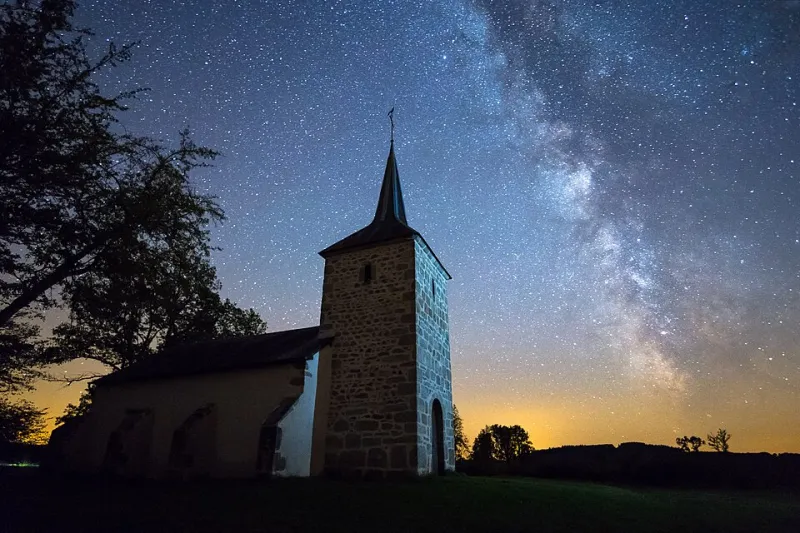
Photo: Benh LIEU SONG, CC BY-SA 4.0, via Wikimedia Commons
Somewhere along the way, Americans stopped looking up. Not metaphorically — literally. The glow of cities and suburbs has crept so far into the surrounding landscape that roughly 80% of people in the United States can no longer see the Milky Way from where they live. A thing that humans have navigated by, written poetry about, and used to mark the seasons for thousands of years has quietly become invisible to most of us.
But drive far enough from the nearest Walmart, and the sky comes back.
A growing number of rural communities are figuring out that this — the simple, ancient act of standing outside in the dark and looking up — is something people will travel for. And not just amateur astronomers with expensive telescopes. Regular people, burned out and overstimulated, who just want to remember what the night is supposed to look like.
The Science of Why the Dark Matters
Before we get into the destinations, it's worth spending a minute on why stargazing tourism is connecting so powerfully with the wellness conversation happening right now.
Light pollution isn't just an aesthetic problem. Research has increasingly linked chronic exposure to artificial light at night to disrupted sleep cycles, elevated cortisol levels, and a range of downstream health effects. Our bodies evolved to read darkness as a signal — time to slow down, recover, reset. Modern life has essentially jammed that signal.
Spending even a few nights in genuine darkness has measurable effects. Sleep quality tends to improve noticeably within the first 48 hours. The enforced screen limitation that comes with being somewhere remote — because let's be real, you're not going to be scrolling while the Milky Way is overhead — contributes to what researchers call cognitive restoration. Your brain, freed from the constant low-grade demand of notifications and decisions, starts doing something it rarely gets to do: nothing in particular.
There's also something harder to quantify but consistently reported by people who make these trips. Astronomers call it the "overview effect lite" — the mild but real perspective shift that comes from confronting the actual scale of the universe on a clear night. Problems that felt enormous have a way of recalibrating when you're looking at light that left its source before humans existed.
Where to Go and When to Go
The International Dark-Sky Association (IDA) designates places that meet rigorous standards for limiting light pollution, and their map of certified Dark Sky Places in the US is a solid starting point for planning. But certification isn't the only marker — some of the most spectacular skies in the country are in places that just happen to be very far from everything.
The Texas Big Bend region consistently ranks among the darkest places in the lower 48. Big Bend National Park and the surrounding Chihuahuan Desert offer conditions that approach what the sky looked like before electrification. The nearest significant light source is hours away in any direction. Visiting between October and March means cooler temperatures and typically clearer skies, and the park's annual Star Party in February draws astronomers from across the country.
Cherry Springs State Park in north-central Pennsylvania is something of a dark-sky miracle given its location in the densely populated Northeast. Sitting on a high plateau surrounded by the Susquehanna State Forest, it's one of the best stargazing sites east of the Mississippi. The park has a dedicated "astronomer's field" that stays open all night, and the surrounding Potter County has leaned into its reputation as a destination for night-sky travelers.
The Oregon Outback — the high desert region of southeastern Oregon around the town of Lakeview — is dramatically undervisited relative to what it offers. The Warner Valley and Hart Mountain National Antelope Refuge area sees minimal tourist traffic, which means genuinely dark skies and a sense of having the place largely to yourself. Summer evenings here are long and mild, making it ideal for extended viewing sessions.
The San Luis Valley in Colorado, anchored by Great Sand Dunes National Park, combines some of the most surreal landscapes in the country with exceptional night skies. The valley sits at high elevation, which reduces atmospheric interference, and the surrounding mountains block much of the light from Pueblo and other Front Range cities. Fall is arguably the best season — the crowds thin out, temperatures are manageable, and the air tends to be crisp and clear.
Rural Idaho's Sawtooth Valley near Stanley is a place that feels genuinely remote even by Western standards. The town has a population of around 100 people, sits at nearly 6,500 feet, and is surrounded by wilderness on all sides. The Sawtooth National Recreation Area received IDA Dark Sky designation, and the combination of high altitude, low humidity, and minimal development makes for conditions that experienced stargazers consistently rate among the best they've encountered.
What These Towns Are Actually Building
The smart rural communities aren't just pointing at their skies and hoping travelers show up. They're building infrastructure — carefully, and in ways that don't undermine the very thing they're trying to protect.
Dark-sky compliant lodging is probably the most important piece. This means outdoor lighting that's shielded, directed downward, and uses warmer-spectrum bulbs that minimize sky glow. A growing number of rural inns and glamping operations have pursued formal certification through the IDA's Fixture Seal of Approval program. It's a meaningful commitment — retrofitting lighting across a property costs real money — but it signals to travelers that the experience they're coming for will actually be there.
Community observatories are another piece of the puzzle. Several dark-sky towns have invested in shared telescope facilities that serve both residents and visitors, often staffed by local astronomy clubs who provide guided viewing and narration. These aren't necessarily high-tech operations — sometimes it's a retired science teacher with a 12-inch Dobsonian and forty years of knowledge about what's overhead on any given night — but they create a shared experience that solo stargazing can't replicate.
Guided night tours have become a legitimate tourism product in several regions, with naturalists and astronomers leading small groups to specific viewing sites, narrating what they're seeing, and contextualizing it within local Indigenous knowledge systems, agricultural folklore, and scientific history. The best of these tours work because they give people a framework for what they're looking at — the sky is overwhelming without some kind of guide.
And then there's the phone-free angle. A handful of rural lodges and retreat centers have started explicitly marketing their remoteness and dark-sky access as part of a digital detox package. No Wi-Fi, minimal cell signal, structured evening programming built around being outside after dark. The demand for this kind of intentional disconnection has grown significantly in recent years, and dark-sky destinations are uniquely positioned to deliver it authentically rather than as a gimmick.
Planning Your Own Dark-Sky Road Trip
If you're putting together a route, a few practical notes: new moon weekends are your target. The moon is the biggest variable in night-sky quality — even a half moon washes out fainter objects significantly. Check the lunar calendar before you book anything.
Elevation helps. High-altitude sites have less atmosphere between you and the stars, which means sharper, brighter viewing. If you're choosing between two destinations of similar darkness, the higher one usually wins.
Give your eyes time. Full dark adaptation takes around 30 minutes, and any white light — including your phone screen — resets the process. Astronomers use red-light flashlights for a reason. Bring one.
And maybe most importantly: go somewhere you actually want to be during the day, too. The best dark-sky trips combine the night sky with a daytime landscape worth exploring — a national park, a stretch of river, a small town with a good diner. The contrast between the day's adventure and the night's stillness is part of what makes these trips hit so hard.
America's rural darkness is one of its most underappreciated resources. It's out there, it's free, and it's waiting — you just have to be willing to drive until the glow disappears behind you.