The Coffee Can Is the Cashier: America's Honor-System Farm Stands Are the Last Great Roadside Bargain
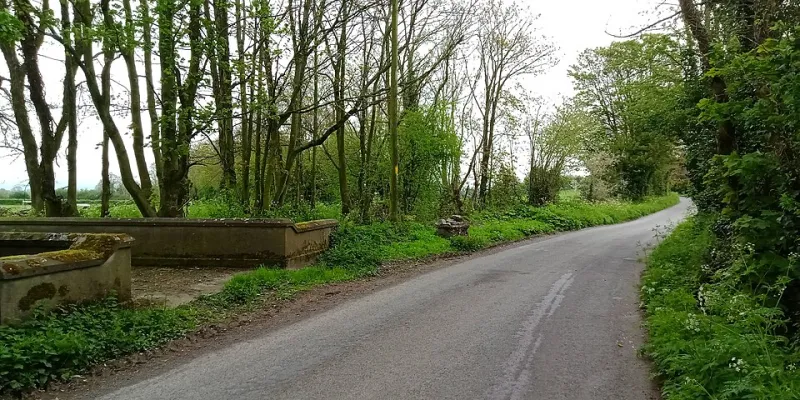
Photo: A.-K. D., CC0, via Wikimedia Commons
The stand appears out of nowhere on a two-lane: a plywood table under a sheet-metal roof, a white cooler with a bungee cord, and a coffee can with a slot cut in the lid. A laminated card lists the prices. Sweet corn, six dollars a dozen. Tomatoes, three dollars a pound. Eggs, five dollars. There is no cashier. There is no one at all.
You take what you want, do the math yourself, and put the money in the can. Then you get back in the car and drive away, and the entire transaction has been conducted on the assumption that you are not a jerk.
Honor-system farm stands are all over rural America, and they are quietly one of the best deals left on the road. The produce was usually picked that morning, the eggs were laid by hens you can hear from the driveway, and the prices undercut the supermarket by a third without any middleman taking a cut.
How a Stand With No Cashier Actually Works
Most of these operations are run by families who have a few acres more than they can eat and no interest in staffing a retail counter. Labor is the scarcest resource on a small farm, so the calculus is straightforward: build a table, paint a sign, buy a cooler, and trust people.
Farmers will tell you the theft rate is low enough that it is cheaper than paying someone to sit there. Losses do happen, mostly from kids or from a cooler left open in July, but the model survives because the overwhelming majority of travelers pay what they owe. In recent years, a laminated QR code has started appearing next to the coffee can, usually with a hand-lettered note saying cash is still preferred because the card fees add up on five-dollar sales.
What you are buying is not just vegetables. It is a five-minute stop with no parking lot, no self-checkout, and no receipt.
What to Buy, Month by Month
The inventory moves with the calendar, and the best stands rewrite their price board with a dry-erase marker every few days.
- April through June: asparagus, lettuces, radishes, peas, green onions, rhubarb, and the first strawberries of the year, which will ruin supermarket berries for you permanently.
- July and August: sweet corn, tomatoes, cucumbers, zucchini piled like firewood, green beans, peaches, blackberries, and cut flowers in mason jars.
- September and October: apples by the peck, pumpkins, butternut and acorn squash, cider, mums, and the last of the tomatoes, sold green for frying.
- November and December: storage potatoes, onions, turnips, hardy greens, wreaths, and whatever is left in the root cellar.
- Year-round: eggs, honey, jams, maple syrup, sorghum, and the occasional homemade soap.
The Etiquette Nobody Writes Down
There is no rulebook posted at these stands, which is a shame, because there is definitely a code.
Bring small bills. A twenty for a five-dollar purchase drains a farmer's change supply and forces a trip into town. Keep fives and ones in the glove box.
Pay for what you take, exactly, even if nobody is watching. That is the entire system. If the box is jammed or missing, leave a note with your name and number and settle up later. Farmers remember.
Close the cooler. Every time. A lid left open on an August afternoon turns a dozen eggs into a problem.
Do not rearrange the display like you are merchandising a boutique. Take from the top. Leave the rest.
Respect the closed sign. If the stand is shuttered with a note saying they are at church or a ballgame, it is not an invitation to self-serve from the back of the truck. Come back tomorrow.
Do not pick your own unless a sign explicitly says U-pick. The rows behind the stand belong to someone's livelihood.
Leave the dog in the car. There are chickens, and there is usually a farm dog who takes his job seriously.
Say something if the produce is off. A note tucked in the money box saying the corn was starchy this week is useful information, not an insult.
Where the Good Ones Hide
The best stands are almost never advertised. They are on the roads between towns, not on the roads to attractions. Some places to point the car:
- Lancaster County, Pennsylvania, and the surrounding Pennsylvania Dutch country, where roadside tables run to shoofly pie and chowchow.
- The Finger Lakes and Hudson Valley in New York, heavy on sweet corn and apples in season.
- Vermont and western Massachusetts, where a cooler of eggs often sits beside a self-serve maple syrup shed.
- Wisconsin and Iowa, where the sweet corn math is a summer religion and a dozen roadside ears beat a supermarket dozen by a mile.
- The Shenandoah Valley and the North Carolina mountains, apple country with cider presses on the honor plan.
- The Central Coast of California and the Willamette Valley in Oregon, where stands sell strawberries and hazelnuts with a QR code and a cash can side by side.
A good stand has handwriting, a cooler with actual ice, and a price list that changes with the week. Slightly imperfect produce is a green flag, not a red one. If everything is waxed, uniform, and shrink-wrapped, you have found a farm market, not a farm stand, and you will be paying accordingly.
Why the Model Survives
The honor box is a small act of faith repeated a few thousand times a season. It works because most people, given the chance to be decent without an audience, take it. Bring a cooler with ice, carry singles, close the lid, and leave the can a little heavier than you found it. That is the whole system, and it has been running just fine for decades.