Silence Is the New Spa: Why Travelers Are Paying Big Money to Hear Absolutely Nothing
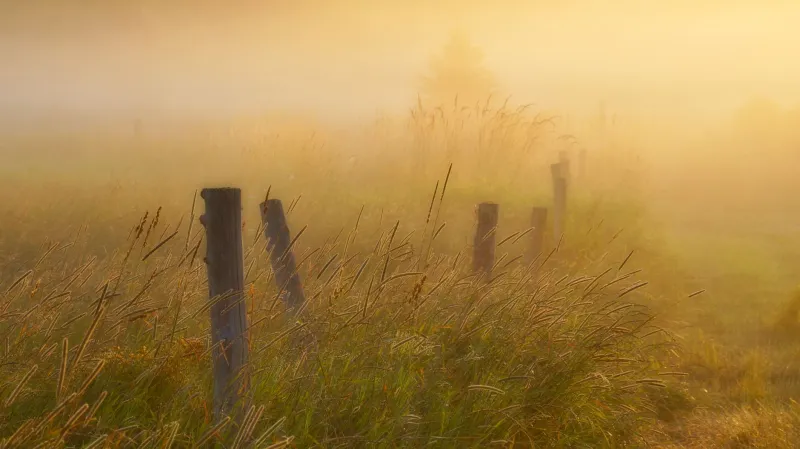
There's a moment, maybe twenty minutes outside of any mid-sized American city, where the highway noise finally gives up. The radio starts to feel unnecessary. You roll the window down and something strange happens — you can hear individual birds. Not just "birds," but a specific bird, doing a specific thing, somewhere in a specific tree. Your shoulders drop about two inches without you telling them to.
That moment? Rural America has been sitting on it for decades. And the rest of the country is only now starting to understand what it's worth.
The Noise Problem Nobody Talks About
The average urban American is exposed to somewhere between 70 and 85 decibels of ambient sound on a regular workday. That's roughly the volume of a garbage disposal running in your kitchen — except it never turns off. Traffic, construction, HVAC systems, neighbor noise, notification chimes, the low hum of a city that simply doesn't sleep. The World Health Organization has flagged chronic noise pollution as a legitimate public health issue, linking it to elevated cortisol levels, disrupted sleep, cardiovascular strain, and a general low-grade sense of dread that most city dwellers have just accepted as normal.
The antidote, it turns out, is embarrassingly simple. Go somewhere quiet.
But genuine quiet — not "quieter than usual" but acoustically clean, biologically rich, human-noise-free quiet — is getting harder to find. And the places that still have it are increasingly figuring out that scarcity creates value.
Appalachian Hollows and the Sound of Nothing Man-Made
In the ridge-and-valley country of eastern Kentucky and western North Carolina, there are communities so geographically sheltered that the nearest interstate is more rumor than reality. Sound travels differently in a hollow. It pools. It settles. The creek noise wraps around you and the birdsong layers on top of it and the whole thing becomes something closer to music than ambient sound.
Small retreat operators in these areas have started marketing this deliberately. Not as a side benefit — as the main event. Weekend programs built around guided listening walks, morning sit sessions in outdoor meadows, and what some facilitators call "acoustic bathing" (essentially the audio equivalent of forest bathing, the Japanese practice of shinrin-yoku) are drawing guests from Atlanta, Charlotte, and Washington D.C. who are willing to drive three hours and pay $400 a night for the privilege of hearing a wood thrush without a car alarm underneath it.
It sounds almost absurdly simple. Guests consistently report it as one of the more profound experiences they've had in years.
The Great Plains and the Geometry of Silence
Appalachia has the topography. But the Great Plains have something different — scale. Standing in a Kansas wheat field or on a Nebraska rise at dawn, the silence isn't intimate. It's architectural. It has dimensions. You become aware of your own breathing in a way that feels almost startling.
A handful of agritourism operators in states like Kansas, Nebraska, and the Dakotas have started building this into their offerings in interesting ways. Some are partnering with sound therapists and meditation instructors to offer multi-day immersive programs on working farms. Others are leaning into the birding angle — the Great Plains flyway is one of the most significant migratory corridors in North America, and serious birders have known for years that some of the best listening spots in the country are right there in the middle of what most people drive through without stopping.
The crossover between birding tourism and wellness tourism is newer, and it's catching on fast. Guided dawn chorus experiences — where guests are up before sunrise to sit quietly and document the acoustic layers of a waking landscape — are booked out weeks in advance at some properties. The demographic skews younger than you might expect. A lot of people in their 30s and 40s who've never held a pair of binoculars in their lives are showing up for these.
What Makes a Soundscape "Valuable"?
This is where it gets interesting from a rural economic development angle. There are actual researchers working on this. The National Park Service has an entire Natural Sounds and Night Skies Division dedicated to monitoring and protecting acoustic environments. Scientists use something called a soundscape ecology framework to measure the health of an environment by the complexity and diversity of its natural sounds — what they call the "biophony" (animal sounds), "geophony" (natural non-biological sounds like wind and water), and "anthrophony" (human-caused noise).
A high-quality rural soundscape — one with rich biophony, minimal anthrophony, and interesting geophony — is, by measurable standards, a resource. Like clean water or fertile soil. And like those things, it can be degraded, protected, or thoughtfully monetized.
Rural communities that understand this early have a real advantage. The infrastructure investment required to market silence is almost nothing compared to building a theme park or a resort. You need the land, some thoughtful programming, and the discipline not to introduce noise pollution yourself.
How to Find It (And What to Expect)
If you're ready to trade your white noise machine for the real thing, the options are more varied than you'd think:
Silent retreat centers in rural Appalachia, the Ozarks, and the upper Midwest offer structured multi-day programs — some with a meditation or mindfulness framework, some purely secular. Expect simple accommodations, minimal cell service, and a first night that feels weird before it feels incredible.
Farm stays with sound programming are emerging across the Plains states. Look for properties that specifically mention acoustic experiences, birding access, or partnerships with wellness instructors. A working farm at 5 a.m. is its own kind of sound environment — not silent exactly, but deeply, usefully real.
DIY road trips through low-population-density corridors — the Sandhills of Nebraska, the Ozark highlands of Missouri, the hill country of central Texas — can deliver genuinely quiet experiences if you're willing to get off the numbered highways and sit still for a while. Pull off on a county road. Turn the engine off. Wait ten minutes.
You'll hear it. Or rather, you'll hear the absence of everything you've been drowning in.
The Bigger Picture
There's something a little poignant about the fact that rural America's most marketable new tourism asset is something that urban America threw away. Quiet was never a selling point because it was never scarce. Now it is.
But here's the thing — for the rural communities building these offerings, this isn't a gimmick. The quiet was always there. The creek always sounded like that. The meadowlark was always doing its thing at sunrise. What's changed is that enough people have gotten loud enough, for long enough, that they're finally willing to get in a car and drive toward the absence of themselves.
Rural America is happy to oblige. Just keep your voice down when you get there.