Leaving the Noise Behind: How Rural America Became the Unlikeliest Wellness Destination
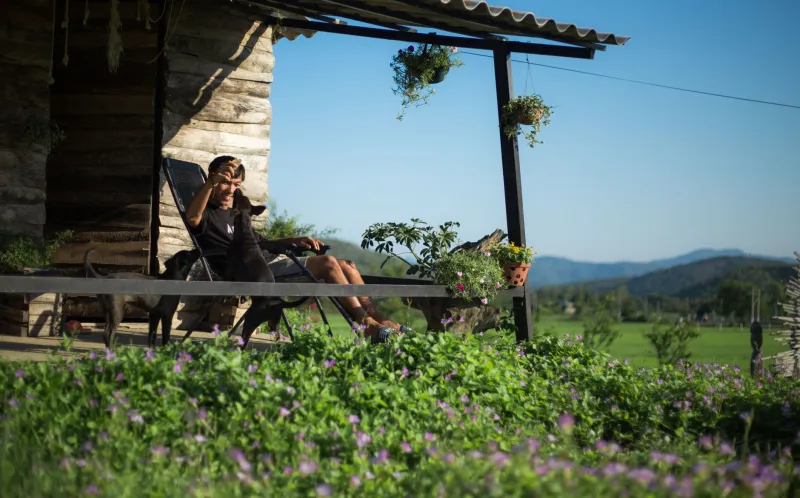
Somewhere between her third anxiety prescription and her second therapist, Dana Merritt decided the problem wasn't her brain chemistry. It was her zip code.
"I was living in a high-rise in Chicago, eating dinner at 10 p.m., and wondering why I couldn't sleep," says Dana, now a resident of a small farming community outside Asheville, North Carolina. "My therapist kept adjusting my meds. Nobody once said: maybe the city itself is making you sick."
She moved two years ago. She sleeps eight hours now. She hasn't refilled her prescription in fourteen months.
Dana isn't an outlier. Across the country, a quieter kind of migration is underway — one that doesn't show up cleanly in Census data or economic reports, because it isn't driven by job offers or housing prices. It's driven by something harder to quantify: a desperate, deliberate search for peace.
What the Research Actually Says
The science here isn't soft. Studies published in journals like Environmental Health Perspectives and Proceedings of the National Academy of Sciences have consistently linked urban environments with elevated cortisol levels, higher rates of anxiety disorders, and a measurably overactive amygdala — the part of your brain that processes fear and stress.
Nature exposure, on the other hand, does something almost pharmacological. A landmark Stanford study found that participants who walked in a natural setting for 90 minutes showed significantly reduced activity in the brain region associated with rumination — that exhausting mental loop of negative self-focused thought that plagues so many people with depression and anxiety.
Then there's what researchers call "soft fascination" — the effortless, restorative attention that wide-open landscapes, birdsong, and slow-moving water provide. Unlike the sharp, demanding attention required to navigate a city street, soft fascination lets the brain genuinely rest.
Put simply: a front porch overlooking a cornfield might be doing things for your nervous system that no app, supplement, or spa weekend can replicate.
The Practitioners Who Got There First
Interestingly, some of the earliest intentional migrants weren't patients. They were therapists.
Dr. Marcus Lyle, a licensed clinical psychologist, left his Atlanta practice six years ago to set up a small counseling office in rural Georgia, about an hour south of Macon. He now sees clients in person and via telehealth, and he's noticed something striking: many of his rural patients — farmers, teachers, retirees — report lower baseline anxiety than his former urban clientele, even when facing objectively harder financial circumstances.
"There's something about the rhythm of rural life that acts as a kind of natural regulator," Dr. Lyle explains. "You wake up when it's light. You work with your hands. You know your neighbors. Those aren't small things — they're the building blocks of psychological stability."
He's not the only one who made the leap. Wellness coaches, somatic therapists, and mindfulness instructors have been quietly relocating to rural communities across Appalachia, the Ozarks, the Texas Hill Country, and the Upper Midwest — sometimes bringing their practices with them, sometimes reinventing themselves entirely.
The Adjustment Nobody Warns You About
Here's the thing nobody puts on the Instagram reel: the first few months can be brutal.
Jeremy Okafor moved from Brooklyn to a small town in Vermont after what he describes as a "slow-motion breakdown" in his late thirties. He'd imagined instant serenity. What he got was silence so complete it kept him awake, a social scene that moved at a pace that felt almost geological, and a creeping awareness that he'd been using busyness as armor for years.
"When you remove all the noise, you're left with yourself," Jeremy says, laughing now in a way that suggests the hard part is behind him. "That's terrifying at first. But it's also kind of the point."
Rural mental health practitioners say this adjustment period is real and worth preparing for. The stimulation withdrawal is genuine — your brain, accustomed to constant input, has to relearn how to idle. Social structures in small towns are tighter and slower to open up. And without the anonymous freedom of city life, you have to actually reckon with who you are.
But for most people who stick it out, something shifts around the six-month mark.
"That's when I started to feel like a person again," Dana says.
The Communities Quietly Welcoming Them
Not every rural town is rolling out the welcome mat, and that tension is worth acknowledging. Long-time residents sometimes view the wellness migration with a mixture of curiosity and wariness — particularly when newcomers arrive with city salaries and start bidding up property values, or treat the local culture like a backdrop for their personal transformation arc.
But in many communities, the relationship is more symbiotic than that narrative suggests. Burnout migrants often bring skills that rural areas genuinely need: healthcare training, small business experience, remote-work income that circulates locally. Some become deeply embedded in the communities they chose — volunteering, farming, coaching youth sports, running for local office.
In rural Kentucky, a former Chicago marketing executive now runs a small lavender farm that doubles as a mental health retreat space, partnering with local therapists to offer weekend programs for burnout recovery. In rural Oregon, a former ER nurse turned her five-acre property into a slow-living retreat that books out months in advance.
These aren't escapists. They're settlers, in the oldest sense of the word.
What This Means for Rural Travel
For travelers who aren't ready to uproot their lives but are curious about what all the fuss is over, this movement offers something genuinely useful: a new way to think about rural road trips.
The countryside has always been a place people passed through on the way to somewhere else. But more and more, it's becoming the destination itself — not because of a landmark or a restaurant, but because of what it does to your nervous system after 48 hours without a notification badge.
Plan a weekend in a genuinely quiet place. Skip the itinerary. Wake up without an alarm. Eat something that came out of the ground nearby. Sit somewhere with a long view and stay there longer than feels comfortable.
You might be surprised what your brain does when you finally stop feeding it emergencies.
Dana Merritt would tell you not to wait as long as she did. "I spent a decade trying to fix myself inside a system that was breaking me," she says. "Sometimes the most radical thing you can do for your mental health is just... go somewhere quiet. And stay."
The heartland is waiting. And it turns out, it's been good for you all along.