Checked Out for Decades, Back Open for Business: The People Saving Rural America's Grand Old Hotels
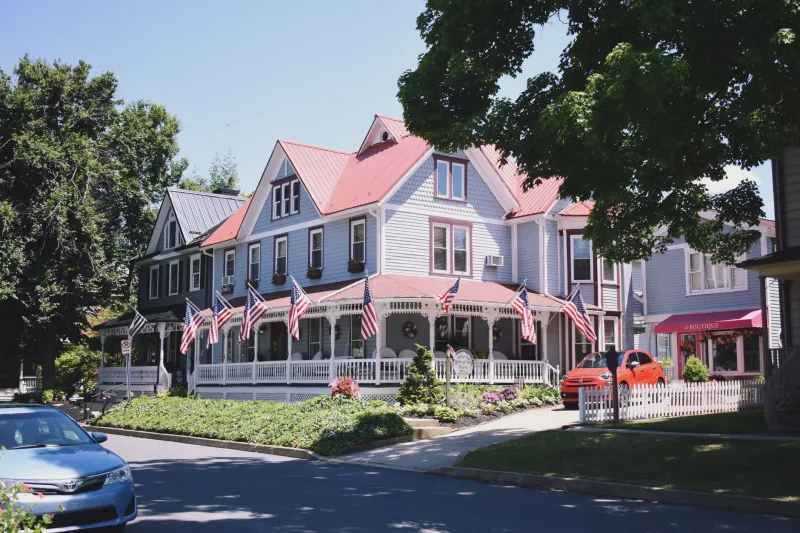
There's a particular kind of building you'll find in almost every rural county seat in America. It's the one with the turret. The wraparound porch. The stained-glass transom windows that somehow survived a century of neglect. It sits on the corner of Main and something, and locals have been walking past it for so long they've stopped actually seeing it.
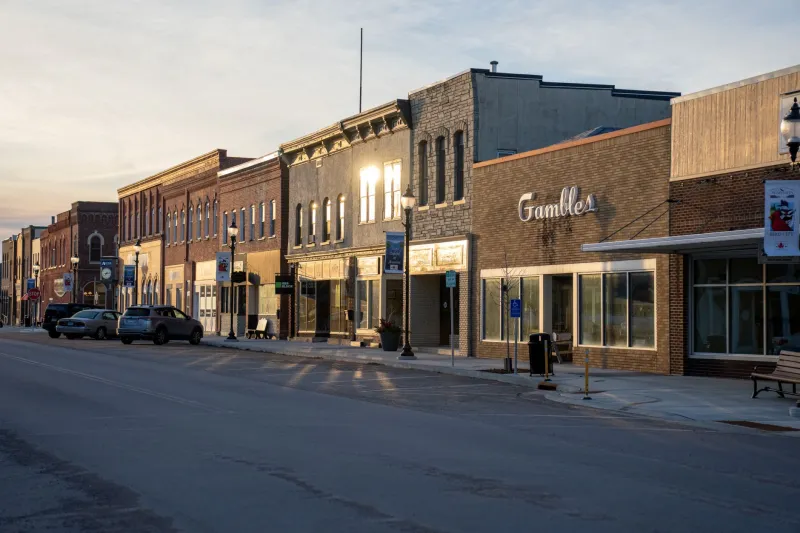
For years — sometimes decades — these places just sat. Boarded up. Slowly losing their battle with gravity and weather. A few got torn down. Most just waited.
Now, some of them are coming back. And the people doing the rescuing aren't preservationists in the traditional, grant-funded sense. They're entrepreneurs. They're couples who burned out on corporate careers. They're small-town natives who moved away and came back with a plan. And increasingly, they're making it work.
What "Distressed Historic Property" Actually Means
Let's be honest about what these projects look like before the renovation photos. A derelict Victorian hotel in a town of 3,000 people isn't a fixer-upper. It's a structural puzzle wrapped in asbestos tile and topped with a leaky roof that's been leaking since the Carter administration.
The bones might be extraordinary — 12-foot ceilings, original heart pine floors, hand-carved banisters — but the systems are usually shot. Electrical. Plumbing. HVAC. These buildings were constructed long before any of those things existed in their modern form, and whatever was added later was usually done on the cheap by whoever owned the place when times got hard.
So why are people still buying them?
Because the math, surprisingly, can work. Especially now.
The Financial Case Nobody's Talking About
Historic preservation tax credits have existed at the federal level since 1976, but awareness of them outside the development world has always been spotty. What's changed recently is that more rural entrepreneurs are actually using them — and combining them with state-level incentives that vary wildly but can be substantial.
The federal Historic Tax Credit offers a 20% credit on qualified rehabilitation expenditures for certified historic structures. Stack that with, say, Missouri's 25% state credit or Virginia's additional residential rehabilitation credit, and suddenly you're recovering nearly half your renovation costs through the tax code. That doesn't make the project cheap. But it makes it survivable.
Then there's the revenue side. A well-executed boutique inn in a rural heritage destination can command nightly rates that would surprise anyone who assumes rural means budget. Travelers seeking authenticity — and there are more of them every year — will pay $200, $250, even $350 a night to sleep in a room with actual architectural character, in a building with an actual story, in a town that feels genuinely lived-in rather than curated for Instagram.
Event revenue layers on top of that. Wedding weekends. Corporate retreats. Private buyouts. These properties, once restored, have a visual drama that generic hotel chains simply can't manufacture. The turret is real. The tin ceiling is real. You can't build that from scratch — not at any price.
Case Study: The Bellman House, Brownsville, Nebraska
Brownsville sits on the Missouri River in the southeast corner of Nebraska — one of the oldest towns in the state, and one that spent most of the 20th century quietly fading. The Bellman House, a Second Empire-style mansion built in 1878, had been through multiple lives: private residence, boarding house, storage facility, and finally, nothing.
When a couple from Omaha bought it in 2019, the asking price was low enough to seem almost like a trap. The renovation took two years and cost considerably more than projected — as these projects almost always do. But the resulting four-room inn, with a garden cottage added in the carriage house, opened to immediate demand from heritage travelers, genealogy tourists tracing Missouri River history, and couples looking for an intimate wedding venue.
By their third year of operation, they'd hosted 11 weddings and maintained an occupancy rate that would make a chain hotel manager take notice. The town, meanwhile, gained a reason for visitors to stay overnight rather than just drive through.
The Ripple Effect on Overlooked Towns
This is the part that doesn't always make it into the business coverage of these projects: what happens to the surrounding blocks.
When a neglected landmark gets rescued and starts drawing overnight guests, something shifts in the local economy. Those guests eat breakfast somewhere. They buy locally made goods. They wander the streets and discover the antique shop, the pottery studio, the third-generation hardware store that somehow hung on.
Restored historic inns function as anchors. They give travelers a reason to be somewhere specific rather than just passing through. And in rural towns where the economic development playbook has been rewritten a dozen times without much success, that kind of anchor is genuinely significant.
Town officials in communities with active restoration projects will tell you the same thing: one well-executed boutique inn does more for local tourism than years of brochure campaigns.
The People Behind the Projects
Spend any time in this world and you notice patterns in who's doing this work. A lot of them are in their 40s or early 50s — old enough to have real professional experience, young enough to have the energy these projects demand. Many have backgrounds in hospitality, real estate, or design, but plenty don't. What they share is a tolerance for uncertainty and a particular kind of stubbornness.
They also tend to have a genuine connection to place. Either they grew up in the town, or they fell in love with it during a road trip and couldn't shake the feeling that something needed saving. That emotional investment matters because it carries them through the moments — and there are many — when the sensible thing would be to walk away.
"If I'd done a proper spreadsheet before I bought it, I probably wouldn't have," admits one innkeeper in rural Tennessee, speaking about the 1890s hotel she's spent five years restoring. "But I also wouldn't have this. And this is worth it."
How to Find Them on Your Next Road Trip
If you want to stay in one of these places — and you should — the National Trust for Historic Preservation's travel resources are a good starting point. State historic preservation offices often maintain lists of certified rehabilitation projects. And honestly, just driving through county seats with your eyes open will surface candidates. Look for the building with the turret.
Many of these inns don't have the marketing budgets of larger properties, so word of mouth matters. When you find one that's doing it right, tell people. Leave the review. Book the return stay.
These buildings waited a long time for someone to believe in them again. The least we can do is show up.